Mirror, Mirror on the Wall: Choosing the Perfect Fit for Every Space
- bonofurniture
- Feb 27
- 5 min read

When it comes to home décor, few pieces are as powerful and versatile as a mirror. Whether you’re refreshing a single room or redesigning your entire home, choosing the right mirror can radically change the appearance of a room and feels. From enhancing natural light to creating the illusion of more square footage, mirrors do far more than simply reflect your image. And if you're sourcing options from a trusted Wall Mirror Supplier, knowing what to look for ensures you invest in a piece that’s both stylish and functional.
In this comprehensive guide, we’ll walk through everything you need to know about selecting the perfect wall mirror for every room in your home. By the end, you’ll feel confident choosing a mirror that enhances your space beautifully.
Why Wall Mirrors Matter More Than You Think
Mirrors are often considered decorative accessories, but they’re actually powerful design tools. The right mirror can:
Make small rooms appear larger
Increase natural and artificial light
Highlight focal points
Balance visual weight in a room
Add personality and style
A well-placed mirror isn’t just décor—it’s strategy.
Step 1: Define the Purpose of the Mirror
Before choosing a style or size, ask yourself one simple question: What is this mirror meant to do?
Functional Mirrors
These are primarily practical. Think bathroom mirrors, dressing mirrors, and entryway mirrors for last-minute checks.
Decorative Mirrors
These act as statement pieces. They may not be used daily but serve as centerpieces in living rooms, dining rooms, or hallways.
Light-Enhancing Mirrors
Strategically placed opposite windows or lamps, these maximize brightness and openness.
Understanding your goal helps narrow down your options immediately.
Step 2: Select the Right Size for the Space
Size can make or break your design. A mirror that’s too small may look lost on a large wall, while an oversized one can overwhelm the room.
General Size Guidelines
Above Furniture: The mirror should be about two-thirds to three-quarters the overall width of the piece of furniture below.
Bathroom Vanity: Keep it slightly narrower than the vanity for balance.
Full-Length Mirrors: At least 48–60 inches tall for proper reflection.
Large Blank Walls: Consider oversized mirrors or a mirror gallery arrangement.
When in doubt, use painter’s tape to outline the mirror dimensions on the wall before purchasing. It’s a simple trick that saves regret later.
Step 3: Select the Perfect Shape
Shape dramatically affects the mood of a room.
Round Mirrors
Soften angular spaces
Ideal for bathrooms and bedrooms
Add a modern, minimalist touch
Rectangular Mirrors
Classic and versatile
Work well above sofas and console tables
Great for traditional or contemporary interiors
Oval Mirrors
Elegant and refined
Excellent for entryways or powder rooms
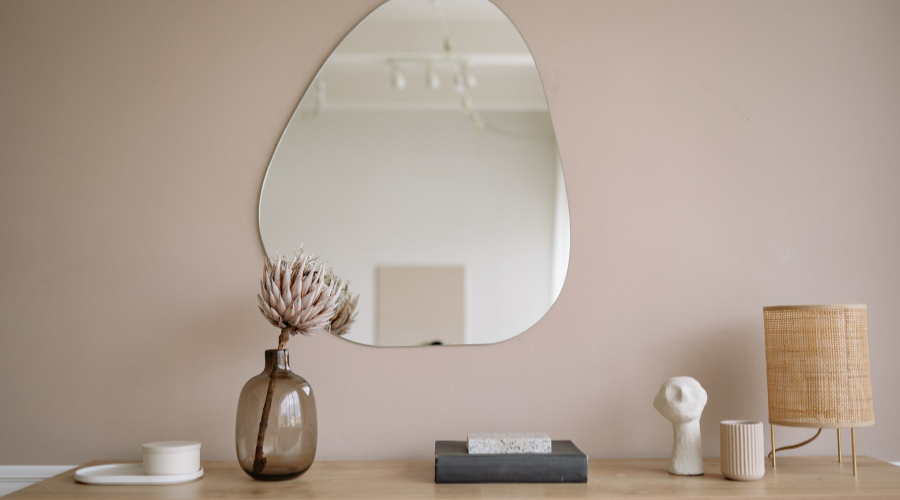
Geometric or Abstract Mirrors
Bold statement pieces
Best suited for modern or eclectic interiors
If your room has mostly straight lines and sharp corners, introducing a round or oval mirror can create visual balance.
Step 4: Frame Style and Material Matters
The frame defines the mirror’s personality. Choosing the right material ties the entire room together.
Wood Frames
Perfect for farmhouse, rustic, or Scandinavian styles. They bring warmth and texture.
Metal Frames
Ideal for industrial or modern homes. Black metal feels bold, while gold or brass adds glamour.
Frameless Mirrors
Sleek and timeless. These are especially popular in contemporary bathrooms.
Ornate Frames
Best for traditional, vintage, or luxurious interiors.
Always match the mirror frame with other finishes in the room—such as cabinet handles, light fixtures, or furniture legs—for a cohesive look.
Step 5: Placement Strategies That Elevate Your Design
Where you hang your mirror is just as important as which one you choose.
1. Opposite a Window
This doubles natural light and makes a room feel airy.
2. Behind a Light Source
Reflects artificial lighting and enhances evening ambiance.
3. Above a Fireplace
Creates a classic focal point in living rooms.
4. In Narrow Hallways
Makes tight spaces feel wider and more welcoming.
5. In Dining Rooms
Adds elegance by reflecting chandeliers and table settings.
Pro Tip: Avoid placing mirrors where they reflect clutter. Whatever is reflected becomes visually amplified.
Room-by-Room Mirror Selection Guide
Let’s break it down space by space.
Entryway: Make a Strong First Impression
Your entryway sets the tone for your home. A mirror here serves both function and style.
Best Choices:
Medium to large statement mirror
Round or rectangular with a bold frame
Placed above a console table
This placement creates depth and offers a convenient last glance before heading out.
Living Room: Add Light and Dimension
In living spaces, mirrors enhance openness and highlight décor elements.
Best Choices:
Oversized mirror leaning against a wall
Mirror gallery arrangement
Decorative framed mirror above the sofa
If your living room feels dark, position the mirror across from a window for maximum brightness.
Bedroom: Softness and Function Combined
Bedrooms benefit from mirrors that add elegance without overpowering relaxation.
Best Choices:
Full-length standing mirror
Round mirror above a dresser
Minimal frame to maintain calm aesthetics
Avoid placing mirrors directly facing the bed if glare or reflection disturbs your comfort.
Bathroom: Practical Yet Stylish
Bathroom mirrors need durability and functionality.
Best Choices:
Moisture-resistant mirrors
Backlit LED mirrors for modern appeal
Frameless designs for clean lines
Ensure the mirror aligns proportionally with your vanity and lighting fixtures.
Dining Room: Reflect Luxury
Dining rooms are perfect for statement mirrors.
Best Choices:
Large rectangular mirror
Antique-style frames
Placement that reflects a chandelier
The reflection enhances elegance and creates visual richness.
Home Office: Expand Productivity Space
Mirrors in offices can reduce the feeling of confinement.
Best Choices:
Medium-sized mirror placed strategically to avoid screen glare
Minimalist frame for professional aesthetics
A well-placed mirror can subtly boost focus by brightening the room.
Choosing Mirrors for Small Spaces
Small rooms benefit the most from smart mirror placement.
Use tall mirrors to emphasize height.
Install mirrored panels to widen narrow walls.
Choose lighter frames to avoid heaviness.
Lean oversized mirrors against walls for dramatic expansion.
Even a compact studio apartment can feel twice as large with the right mirror strategy.
Common Mistakes to Avoid
Even beautiful mirrors can fail if chosen poorly. Avoid these pitfalls:
Choosing style over function
Ignoring proportions
Hanging mirrors too high
Reflecting unattractive views
Overcrowding walls with too many mirrors
Balance is key. Mirrors should enhance—not overwhelm.
How to Ensure Quality Before Buying
A mirror is an investment piece. Look for:
High-quality glass with clear reflection
Sturdy backing
Durable framing material
Proper mounting hardware
Moisture resistance for bathrooms
Quality mirrors last for years and maintain clarity without distortion.
FAQs
1. What size mirror makes a room look bigger?
Large mirrors, especially those placed opposite windows or light sources, create the strongest illusion of expanded space.
2. Should mirrors match the furniture?
They don’t need to match exactly, but they should complement the room’s overall style and finishes.
3. Is it okay to mix mirror shapes in one home?
Absolutely. Mixing shapes adds personality—just maintain design harmony within each room.
4. How high should a wall mirror be hung?
The center of the mirror should typically sit around eye level, approximately 57–65 inches from the floor.
5. Are frameless mirrors better for modern homes?
Yes, frameless or slim metal-framed mirrors work especially well in contemporary and minimalist spaces.
Final Thoughts:
Choosing the perfect wall mirror is about more than just picking something that looks good—it’s about understanding how size, shape, placement, and function work together to enhance your home. From brightening dim corners to making compact rooms feel expansive, mirrors are one of the most powerful design tools available. When selected thoughtfully, they don’t just reflect your space—they transform it. By considering proportion, purpose, and positioning, you can confidently choose mirrors that elevate every room and bring harmony to your entire home.


Comments